
7 top patient accounting software programs for chiropractic practices in 2026

Key takeaways:
- Eclipse EHR is best for established chiropractic practices wanting a stable, chiropractic-first platform where SOAP notes, billing, and claims run as one workflow.
- MicroMD is best for multispecialty clinics with chiropractic services that need flexible billing and rejection monitoring across multiple clearinghouse partners.
- CareCloud is best for larger practices and hospital-affiliated clinics wanting AI-driven claim scrubbing paired with deep financial analytics and dashboards.
- AdvancedMD is best for chiropractors in group practices who prioritize a high first-pass claim acceptance rate and need custom financial reporting.
- DrChrono is best for growing multispecialty practices wanting real-time claim tracking from appointment scheduling through final payment in one dashboard.
- DocVilla is best for budget-conscious practices wanting an all-in-one EHR with pre-filled CMS-1500 forms and flexible HSA/FSA payment options.
- ClinicMind is best for high-volume chiropractic practices wanting same-day claim submission and pay-per-visit pricing tied to actual usage.
Chiropractic practices face unique patient accounting challenges.
For starters, patients usually come in for multiple sessions, but the payment is received after a session is completed. Tracking these packages as deferred revenue can increase tax liability.
Payments also come in three different ways: cash, insurance, and workers’ compensation (for personal injury claims), which makes it difficult to maintain a healthy bottom line.
Paying the chiropractors can be complex too. Some doctors may be working as contractors while others could be full-time employees.
These unique roadblocks require Doctors of Chiropractic (DCs) to use dedicated patient accounting programs for their practices. This article walks you through seven such platforms you can consider for 2026 and beyond.
How we made this list of patient accounting software programs for DCs
To give you a list of options that will improve your chiropractic medical practice’s accounting processes, we began by analyzing the top leading tools listed in authoritative healthcare software directories and publications.
Then, we looked for robust accounting features and supporting capabilities that will help you receive payments, file claims, maintain tax compliance, and manage payouts to chiropractors effectively.
Finally, we collected its pricing details from official websites and gathered pros and cons from independent, third-party review sites like G2 and SoftwareAdvice.
We focused on the pros and cons that will help you evaluate the tools below from an accounting perspective.
7 best patient accounting software for chiropractic practices
If you are in a hurry, check out the summary table with all the essential details for each of the chiropractic accounting software programs listed:
A side-by-side comparison of patient accounting software programs for chiropractors.
Note: This is a list rather than a ranking.
1. Eclipse EHR
Eclipse EHR is best for: Chiropractic clinics that need a reliable and scalable practice management solution with strong patient accounting capabilities.

Eclipse EHR merges revenue cycle management (RCM) with your chiropractic workflows to simplify patient accounting. The software program will help you accept payments in different methods and file insurance claims automatically.
Its analytics feature provides insights into accounts receivable and location-specific financial performance.
Eclipse EHR's key features
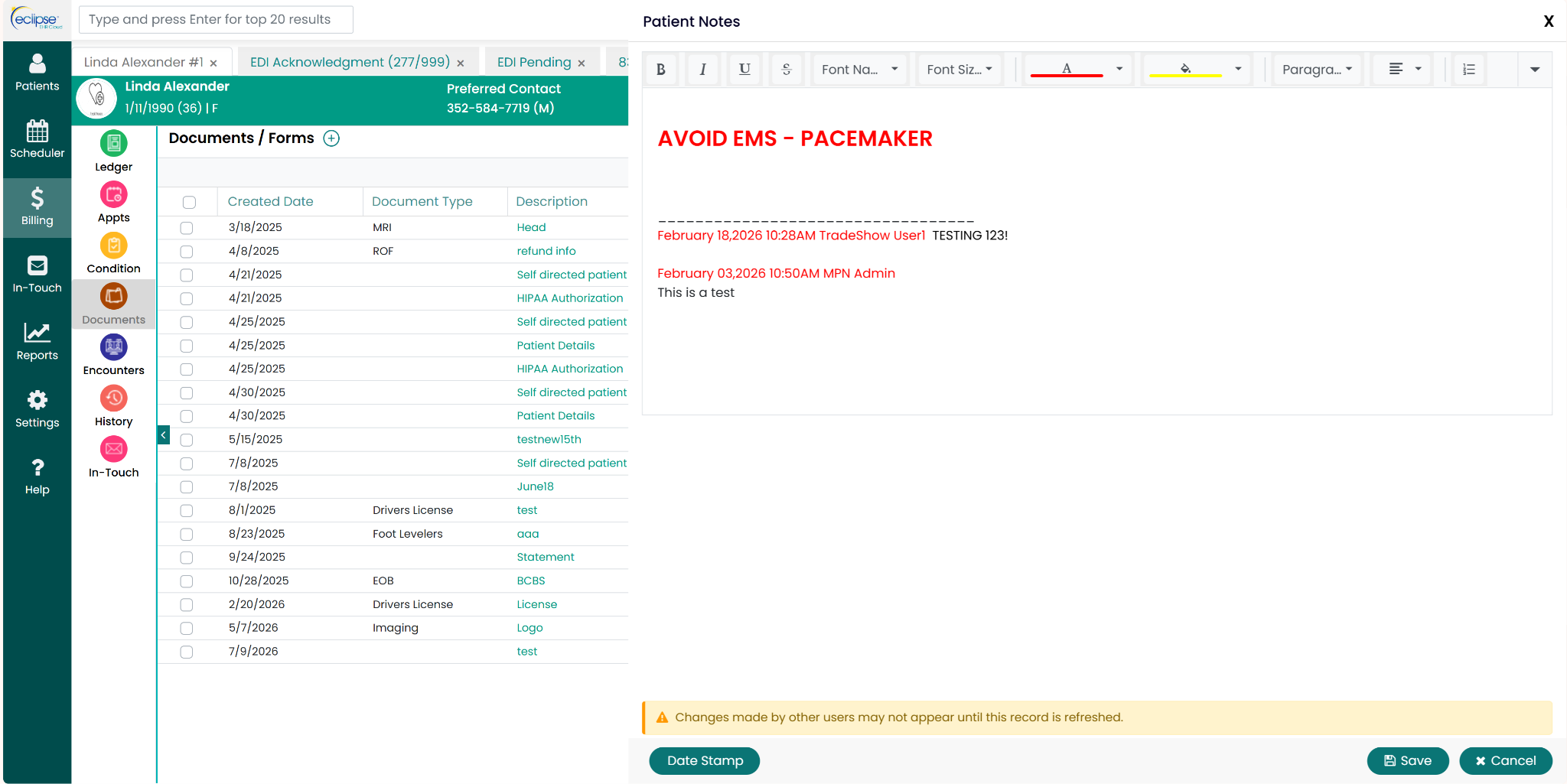
- SOAP note-taking integrated with billing, so charges flow from the encounter into claims
- HIPAA-certified electronic claims and electronic remittance (ERA) with payments imported directly into patient files
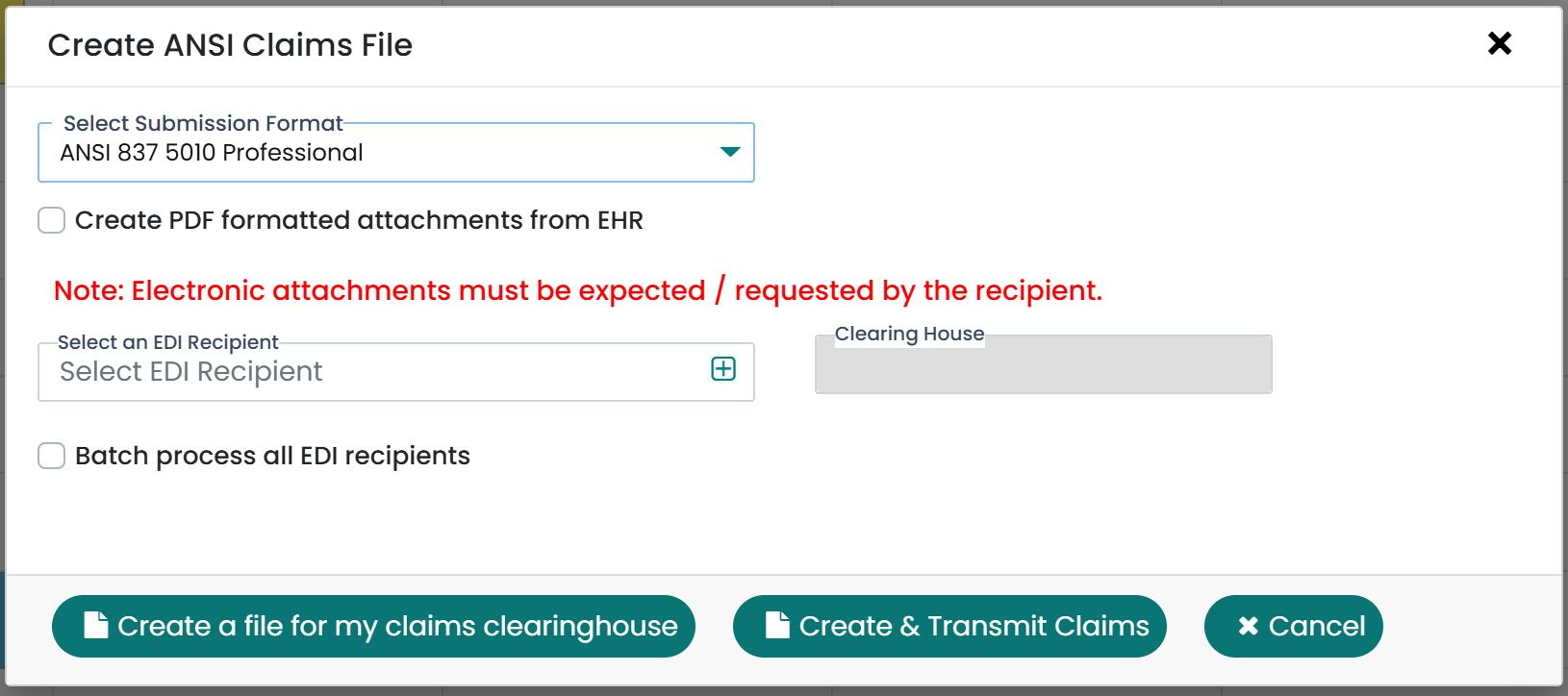
- Integrated clearinghouse support (interfaces with Alveo, Carisk Intelligent Clearinghouse, Infinedi)
- Insurance eligibility verification and multi-level deductible handling with overrides
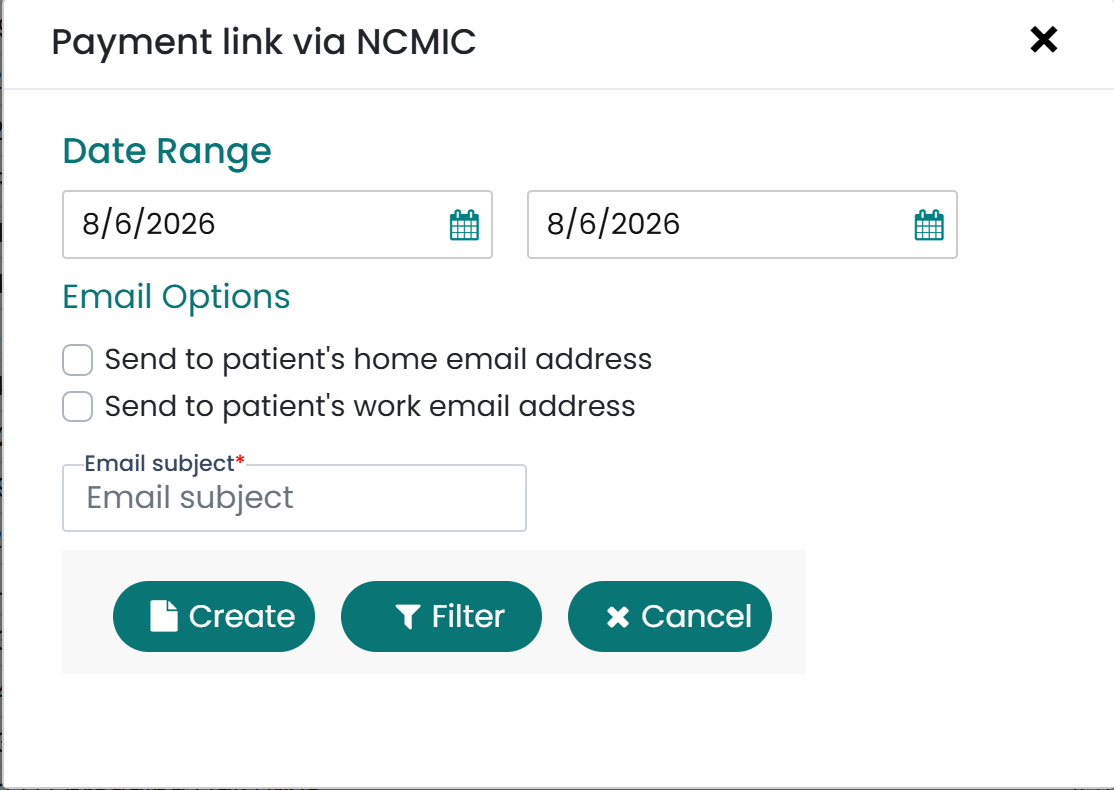
- Built-in payment processing with two integrated processors (NCMIC and Global Payments), credit-card integration, and customizable financial/AR/practice-statistics reports
Eclipse EHR's pros
- Has chiropractic-specific billing and financial management systems
- Highly responsive USA-based support team (rated 4.6) that gets on a call to resolve issues
- Reliable and stable platform that has served many practices for decades
- Provides 1:1 free training during onboarding to help understand the platform’s features
Eclipse EHR's cons
- Some SOAP note presets weren't customizable, which may require workarounds.
Eclipse EHR's pricing
The cloud-based chiropractic accounting software for healthcare is priced at $99/month. The core package includes everything from billing to scheduling to help chiropractors manage their practice effectively.
The platform offers add-ons like bi-directional text messaging, reputation management, an AI help bot, AI-assisted note-taking, EDI private clearinghouse automatic import/export, and an online patient portal.
2. MicroMD
MicroMD is best for: Chiropractors who work in multispecialty clinics and need an accounting solution that also works for allied services.
MicroMD, acquired by PracticeSuite in 2025, helps chiropractors working in multispecialty clinics with RCM and claims filing.
The software automates insurance eligibility checks and provides flexible billing configurations depending on payment methods. DCs can deploy custom “explosion codes” to group multiple charges and receive payments online.

MicroMD's key features
- Practice-management module with patient billing, claims management, charge capture, and collections
- Insurance eligibility checks and "get paid faster" workflows via four preferred clearinghouse partners
- Electronic remittance/EDI processing and rejection monitoring/error correction tools
- Multiple financial reports and customizable reporting; patient-balance and past-due notifications/reminders
MicroMD's pros
- Doctors and clinicians praise the billing and reporting customization
- Easy to collect payments from patients via ePayments integration
MicroMD's cons
- An older review mentions that the cloud accounting software is priced based on users, which can be costly for large clinics
- Migrating medical reports for practitioners outside Texas can be challenging
MicroMD's pricing
MicroMD hasn't published their pricing details on their website. To learn how much it might cost your chiropractic healthcare practice, you need to speak with their sales team or book a demo.
3. CareCloud
CareCloud is best for: Large clinics and hospitals looking to optimize their financial processes across their care services.

CareCloud, like MicroMD, is a multispecialty-focused EHR solution with a comprehensive accounting system for healthcare professionals, including chiropractors
The solution helps prevent billing errors, optimize claim reimbursement, file appeals faster, and authorize payers automatically.
CareCloud's key features
- CollectiveIQ automated billing rules engine scrubs claim pre-submission
- Electronic claims (EDI) and ERA enrollment included in all packages
- Denial management with denial listing by payer/age/reason and insurance eligibility verification
- Command-center dashboard with KPIs (revenue, collections, denials, AR) plus PrecisionBI analytics
CareCloud's pros
- Clean billing software with denials worked correctly
- Strong financial statement reporting/tracking and concierge billing help
- Move from visit notes to billing for a patient within their profile
- CollectiveIQ claims scrubbing and analytics to improve clean-claim rates
CareCloud's cons
- The software crashes sometimes if you have multiple pages open, which can affect concurrent billing processes
- Poor customer support (non-English speakers) and slow claim handling.
CareCloud's pricing
The software solution can be priced based on the number of users or per practice, depending on your preference. Chiropractic practitioners in the healthcare industry will have to contact their team to get a personalized quote.
4. AdvancedMD
AdvancedMD is best for: Chiropractors working with allied caregivers who want a common accounting platform.

AdvancedMD's chiropractic solution helps you with three core areas of patient accounting: claims management, clearinghouse, and patient payments.
It is known as one of the best in the medical industry and has been helping various kinds of practitioners with finance management for over a couple of decades.
AdvancedMD's key features
- ClaimInspector scrubs claims for CCI/HIPAA/LCD errors pre-submission using several government and third-party industry edits
- Charge capture pushed from charting to billing instantly to facilitate electronic claims, electronic remittance (ERA) posting, and denials management
- Insurance eligibility verification (batch pre-appointment), patient statements module, and integrated credit-card processing for copays
- 150+ standard and ~500 custom financial reports
AdvancedMD's pros
- One of the most reliable claim scrubbing tools (the brand claims a 95% first-pass clean claim acceptance rate)
- Intelligent work queues that connect charting to billing
- Clinicians also praise it for robust customizable financial reporting
AdvancedMD's cons
- The tool's workflows are inefficient because they have too many steps for regulatory compliance.
- Occasionally buggy, where it doesn't record a session's details efficiently, leading to manual workarounds when billing
AdvancedMD's pricing
The pricing can be immediately accessible, but it depends on the size of your practice. You need to provide your personal information along with the number of providers at your chiropractic clinic to get a quote instantly. For a detailed breakdown, you may need to book a demo.
5. DrChrono
DrChrono is best for: Chiropractors working in multispecialty clinics who need a financial system that works well for the organization.

DrChrono saves chiropractors time by automating financial data entry, payment processing, compliance reporting, and claim management. You can also use this comprehensive patient accounting software to bulk check insurance eligibility and auto-post ERAs.
For out-of-pocket costs, it supports stored cards on file and sends digital statements with embedded payment links to speed up collection for your chiropractic practice.
DrChrono's key features
- Integrated billing, auto-generated CMS-1500 forms, custom billing codes, billing profiles, fee schedules, and superbills
- Electronic claim submission with Live Claims Feed tracking (from scheduling through payment) and real-time insurance eligibility checks
- Electronic remittance advice (ERA) posting and denial visibility (rejected/ERA-denied/paid-in-full statuses) to support tax compliance
- Billing Summary report with clean-claim rate, net collection rate, denial rate, and days-to-payment
DrChrono's pros
- Doctors and providers like the ease of use and customizability of the billing workflows
- Supportive onboarding team to help DCs upgrade their billing workflows during adoption
- Established practices can consolidate operational data to improve billing and repayment workflows
DrChrono's cons
- The platform's custom reporting can be limiting for large clinics that may need different types of financial reports
- User access control has only a few profile types, which can affect what administrative staff can do in the billing workflows
DrChrono's pricing
The healthcare accounting and management platform has three pricing tiers: Foundation, Growth, and Premium. They differ by the number of capabilities bundled. You will need to speak with their sales team to get a personalized quote for your chiropractic practice.
6. DocVilla
DocVilla is best for: Chiropractors looking for a cost-effective platform that simplifies back office workflows and revenue recognition.

DocVilla optimizes chiropractic patient accounting by integrating revenue cycle management directly into the EHR. Its one-click insurance claim submissions and real-time eligibility checks help DCs receive payments quickly.
Patients can securely pay using credit, HSA, or FSA cards with DocVilla, which improves their in-clinic experience.
DocVilla's key features
- Electronic claim submission from a built-in CMS-1500 with most fields pre-filled from the chart and connected to 4,000+ medical billers
- One-click checks of co-pay, deductible, max out-of-pocket, and covered/non-covered items
- Allows patients to pay by HSA/FSA/credit cards directly
- Financial performance and revenue-cycle tracking dashboards
DocVilla's pros
- Clinicians say the platform's all-in-one nature reduces manual data entry and minimizes claim-processing friction
- Rated highly for helpful and quick customer support
DocVilla's cons
- Due to its comprehensive nature, the platform does have a learning curve
- Limited template customization capabilities and can slow down when multiple tabs are open.
DocVilla's pricing
The pricing plans are priced per provider per month. They are Bronze $100 (EHR + telemedicine), Silver $200 (adds practice management), Gold $350 (adds DPC, patient intake, patient billing, referrals, PDMP), and Platinum (custom quote) for practices with more than 25 prescribers.
7. ClinicMind
ClinicMind is best for: Chiropractors and allied care providers who are struggling with distributed patient financial data.

ClinicMind prompts for Active Treatment (AT) modifiers during SOAP notes to prevent billing denials, automates claims and ERA posting, integrates back office workflows with ECM, and utilizes ClinicMind Pay to receive payments securely.
ClinicMind's key features
- Automated claim submission (same day as the visit), denial follow-up, appeals, and payment posting
- Makes it easy for patients to pay with card-on-file, recurring/automated payments, and POS terminal support
- E-statements via email/SMS and 50+ billing reports to help make financial tasks faster
- Real-time eligibility plus optional live payer-called verification
ClinicMind's pros
- Chiropractors repeatedly credit the integrated billing service that automates payment collection
- Purpose-built chiropractic workflows (travel cards, care plans, superbills) that connect to the revenue cycle
ClinicMind's cons
- Clinicians may struggle with filing claims because the software may reject them mistakenly
- The pricing tier can be too costly for large clinics treating a high volume of patients in multiple locations
ClinicMind's pricing
ClinicMind has a pay-per-visit pricing model that charges $2/visit. It offers three tiers: cash-based, in-house/self-service billing, and fully managed billing.
How to choose the right patient accounting software for your chiropractic practice
Every chiropractic practice runs on a different mix of patient volumes, insurance panels, and care models, so the "right" software rarely comes down to a single feature.
Use this framework to narrow your options.
- Map your billing workflow: Cash-based practices, insurance-heavy clinics, and multi-location groups all have different needs. If you handle Medicare or work across medical specialties, prioritize platforms with strong claim scrubbing.
- Audit compliance and security: Any tool you shortlist must be HIPAA compliant and provide clear internal controls for handling protected health information.
- Weigh reporting depth: Look for real-time financial insights, custom reports, text-based updates, and dashboards. These should help track clean-claim rates, AR aging, accounts payable summaries, and revenue per provider. If you operate in many locations, look for multi-entity consolidation.
- Check the pricing model: Per-provider, per-visit, and flat-fee structures each favor different practice sizes. Small businesses often overpay on per-user plans; high-volume clinics may prefer flat rates.
- Test the workflow: Cloud-based solutions should reduce manual processes, not add clicks. Book a demo and walk through a real patient encounter end-to-end before signing.
Simplify chiropractic accounting for patients with Eclipse EHR
Chiropractic practices have unique needs because of recurring visits, long care plans, payers who don't always understand chiropractic coding, and patient balances that stretch across weeks.
Here, a generic medical accounting software will fall short when providing real-time visibility into your chiropractic workflows, let alone helping you be more efficient.
Eclipse EHR has been addressing those needs since 1985 by integrating SOAP note-taking and patient flow with billing, so chiropractors can automatically collect payments and file claims.
Its HIPAA compliance ensures your patients' key data stays protected while setting up a reliable and scalable financial foundation.
These chiropractic-specific patient accounting capabilities make it one of the best solutions to manage your practice’s finances.
Book a demo today and see how Eclipse EHR can improve your chiropractic accounting process and patient engagement.
Frequently asked questions about patient accounting software programs for chiropractors
1. Why can't chiropractors just use generic accounting software like QuickBooks?
Generic tools don't handle chiropractic-specific needs like SOAP note-to-billing integration, insurance claim scrubbing, workers' compensation tracking, or deferred revenue from prepaid care packages. Dedicated platforms combine clinical workflows with billing, reducing manual entry and helping practices stay compliant with healthcare-specific regulations.
2. How do chiropractic accounting programs handle prepaid care packages and deferred revenue?
Chiropractic accounting programs let you track package payments as deferred revenue and recognize income only after each visit is completed. This prevents inflated tax liability and gives an accurate picture of earned versus unearned revenue, which is essential for practices selling multi-session treatment plans.
3. What's a clean claim rate, and why does it matter for chiropractic practices?
A clean claim rate measures the percentage of insurance claims accepted on first submission without errors. Chiropractic accounting software that integrates with EHR systems and tracks billing codes can automatically flag errors before submissions, helping increase claim rates.
Related Blog Posts